


*Click on the photographs for an in-depth explanation of each painting


Wrinkled Time
Title: Wrinkled Time
Material: Earth and mineral pigment, chalk, color pencil, conte, and shellac, on silk.
Size: 82.5 cm x 41.7 cm
Year: 2024
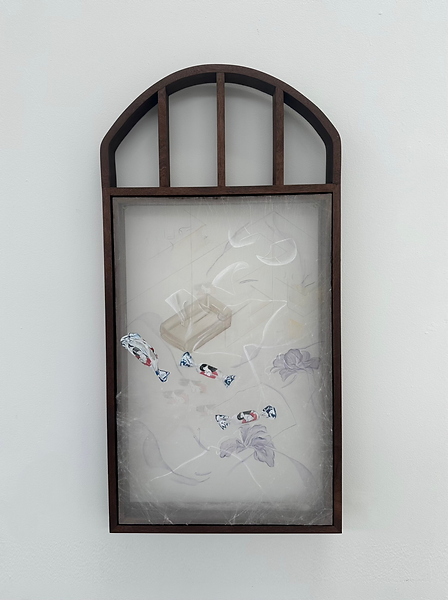
This painting was created with the previous painting, 'Written in Water.' I worked on both pieces at the same time. I continue on my exploration into moving away from purely capturing intimacy at home, and attempting to have a more dynamic understanding of intimacy. The process of creation for this piece is similar to the previous:
memory drawing (without prompt) -> memory drawing (with prompt)-> place silkworms on the canvas to spin silk
This brings me to the second piece of work I presented at the summer show:
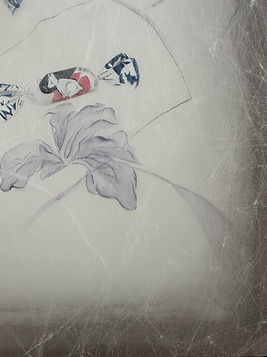
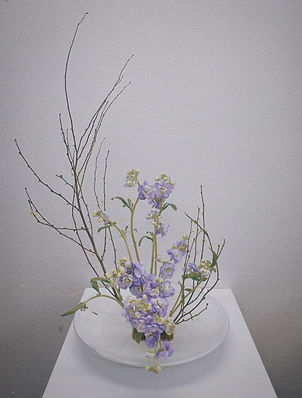
Thinking back to the wedding I attended in Iga City, I remember being fascinated by the ikebana arrangements (traditional Japanese flower arrangement) that decorated the room. I was not surprised that the wedding placed such a heavy emphasis on ikebana, as the bride and I use to take Ikebana classes together when we were younger. I remember the bride loved those class and would even import in exotic plants for her flower arrangements. My favourite ikebana arrangement at the wedding was probably those that contain soft purple flowers. The shade of purple chosen was beautiful and the arrangement was balanced to capture the natural beauty of those petals.
Apart from that, I remember eating tons of Wagashi (traditional Japanese dessert/ sweet) . Not only were the Wagashi made like tiny works of art, they were tasty. I later found out that in Japanese weddings, different Wagashi dishes, have different meanings. For example, the sakura shaped ones are usually meant to symbolise never ending love/ fresh beginnings. I was also very touched that even though we haven't met in years, the the bride still remembered by favourite childhood candy was White Bunny sweets , also known as "白兔奶糖".. Alongside the Wagashi dishes, she prepared some White Bunny sweets for me too.
<<< Photos of the Wagashi and Ikebana are below under supporting work>>
Details:
Before the Summer Show's feedback where I was introduced to 'An Angel at the table' and the reminded to challenge my preconceived notions about intimacy and memory, I naturally assumed that memories, passage of time and intimacy should be represented by light, floating colors. This is because memories, passage of time and intimacy have an ephemeral quality to them, and are prone to disappearance and transformation.
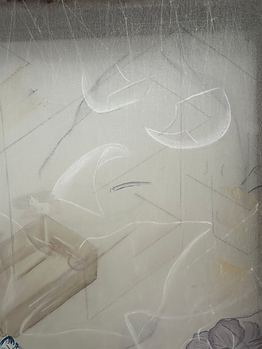
I attempt to use gentle strokes and colors that seem to hover over the surface of my canvas. Through this, I hope to convey the message that memories are fluid, and are always on the verge of disappearing or evolving into something new. This mirrors how mist dissipates into the air. This technique was inspired by a comment during the Copeland Gallery show which mentioned that my use of silk fibres over my canvas reminded them of mist, another element of nature that has a transient quality to it.I was also encouraged to explore cyanography as another medium to articulate time. Even though I did not branch into cyanography in the summer exhibition, cyanography made me think of faded photograph, which is also what I hope to emulate through gentle strokes.
As explained under 'Written in Water' :
I continue to apply several techniques from Unit 2.
This includes overlapping lines to convey emotions and hence intimacy, as well as playing with the blank space.
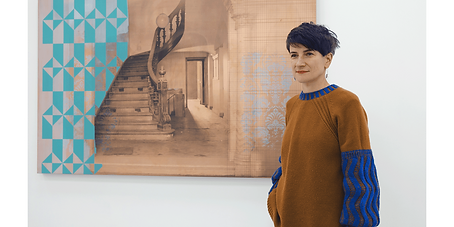
Magda Stawarska, Shimmering Moment, 2024. (Frieze London, 2024)
However,I would like to add on that in Unit 3, my exploration of blank spaces took a new direction. I was inspired by Magda Stawarska’s works.
Stawarska plays with the 'blank space' in her works too. However, rather than just looking at it as a 'space', she is able to blend in the use of materiality seamlessly. For example, she uses the interaction of the blank space of her copper canvas and its interaction with light in her works to play with the perception of the blank space (Frieze London, 2024). Depending on the angle and intensity of light, the copper can take on various qualities, from being close to invisible ( similar to the silk I use in my work) to a prominent element (Frieze London, 2024).
Even though I had the intention to experiment with silk in a similar way, I was restricted by the lack of time. Hence, I have not been able to put my ideas into action. However, I am looking at the possibilities of incorporating elements such as glitter or Shiniwa, which has a shiny texture to it in future works.
The last stage of this piece, is the same as 'Written in Water'. It is the stage where I guide silkworms across my canvas to articulate the passage of time, memory and intimacy. Similar to 'Written in Water', this process was outsourced as I wanted to keep my Summer Exhibition works for long some time and I was still not skilled enough to prevent animal waste from remaining on the silk fibres ( which will lead to decomposition).
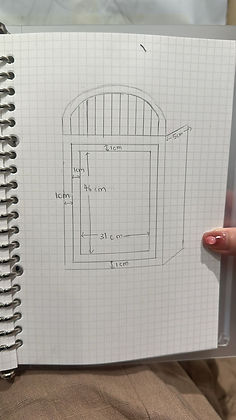
The Framing for this piece continues to be inspired by Windology.As I have delved into it in detail under ‘Written in Water’, I will not be elaborating on it here.
Supporting work:
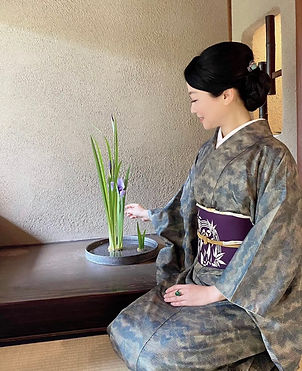
Japanese Ikebana :Ikebana is the Japanese art of flower arrangement, and the word translates to "giving life to flowers" (Kakizaki, 2023)
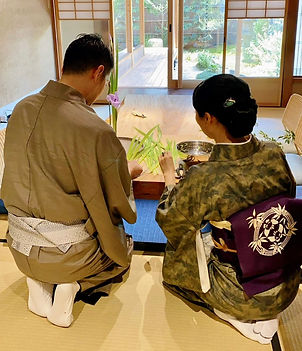
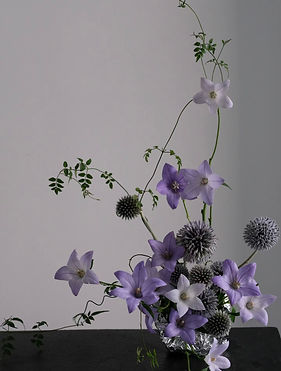
Ikebana: Amongst all, my favourite were the flower arrangements with purple flowers
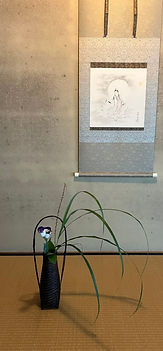
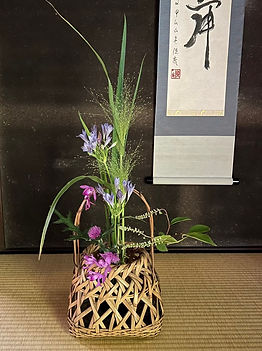
Ikebana being made
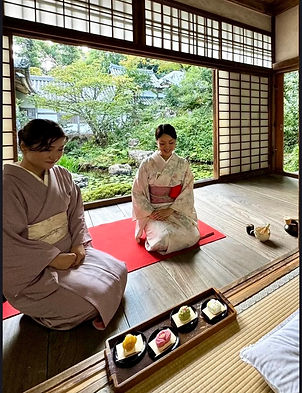
Wagashi being served
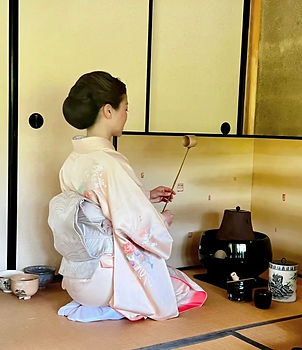
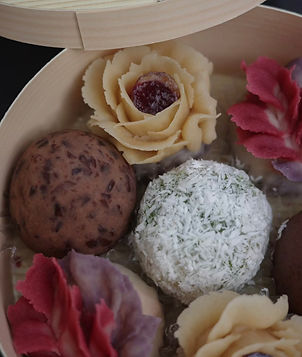
Tea being prepared to be served with Wagashi dishes
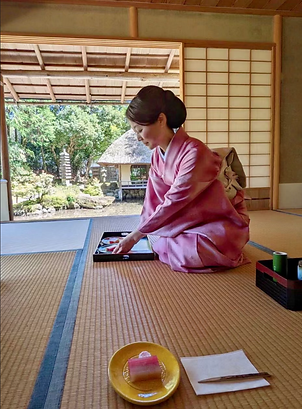
Wagashi dishes being served
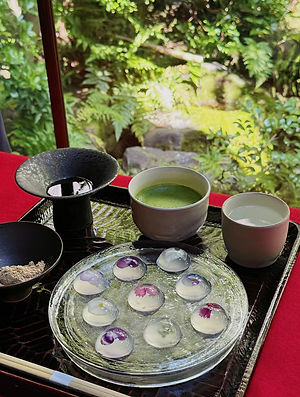
Wagashi/ Japanese traditional sweets:Sometimes Wagashi dishes are served with tea (Su xi Su xi, 2024)
Wagashi/ Japanese traditional sweets
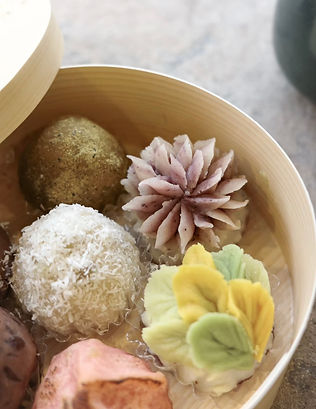
Wagashi/ Japanese traditional sweets
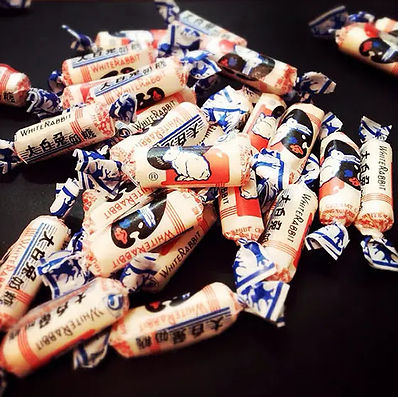
White Bunny sweets , also known as "白兔奶糖" (The Hong Kong Cookery , 2014)
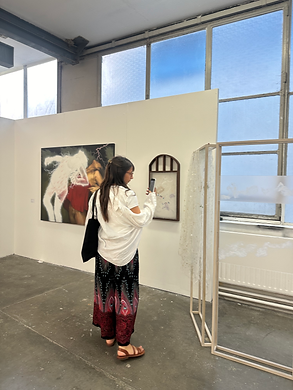
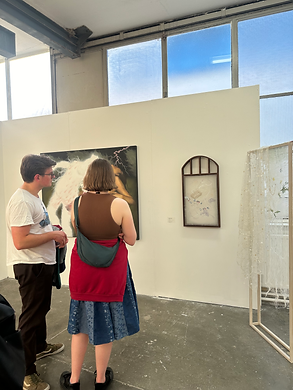
In context of other works in the show
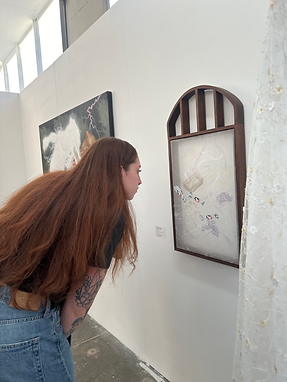
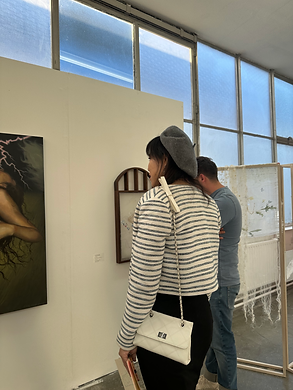
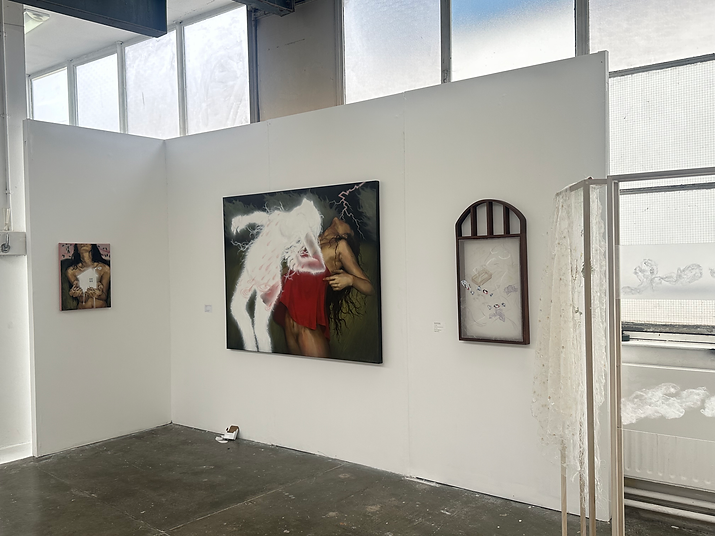
Challenge:
Similar to 'Written in Water', I struggled a lot with lighting for this piece.
Initially, I was arranged to be at Level 2. However, due to the lack of space, I was moved to Level 5.
I am very grateful that Professor Geraint was willing to let me move as the lighting at level 5 was a lot more suited for my work.
Moving on from the Summer Exhibition, I was encouraged to learn to co-exist with various lightings. This is a suggestion I have put much thought to.However, I have not been able to find a middle-ground between both ends that I am willing to settle for.
Experimentation
Experimenting with colors:
In previous works, whenever I wanted to test the effect of various colours on my silk, I had to test them individually. This is because the transparency of silk dictates that colours differ greatly depending on the weave of the silk. This created some wastage as I work with pigments and animal glue. Regardless of how little material I use, there is always still wastage. Hence, I experimented with the possibility of making a colour atlas on silk. To achieve this, I collaborated with maake, a company that specialises in colour theory.
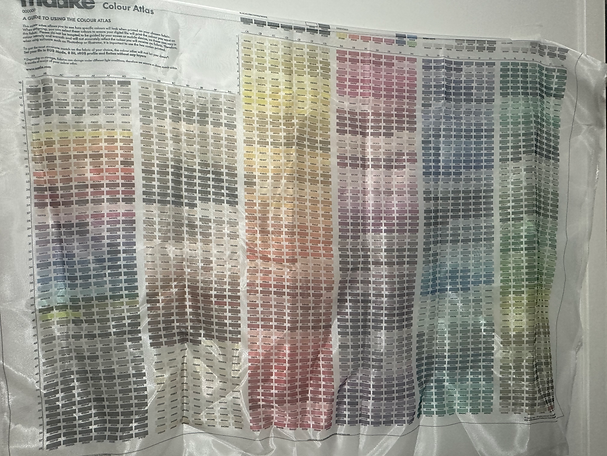
Colour experimentation on 35 gsm silk :Pigment printing
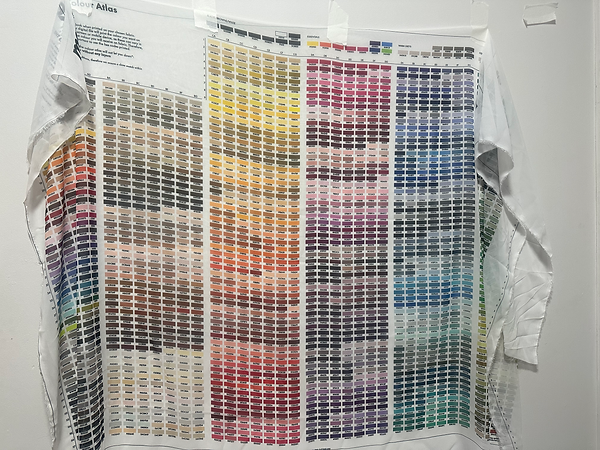
Colour experimentation on 65 gsm silk: Pigment printing
Experimenting with material:
For the summer show, I experimented with the possibility of using alternative materials such as acrylic. However, I still very much prefer the 'weight' that wood gives to my works. Additionally wooden windows are significant in asian architecture, which aligns with the initial inspiration for my frames (Japanese Windowlogy)
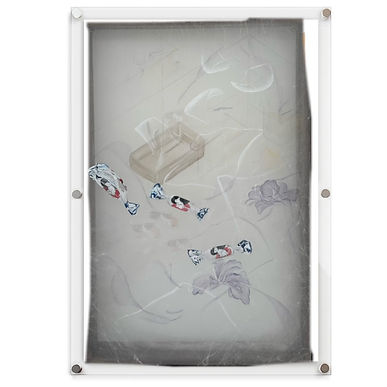
VS
Acrylic
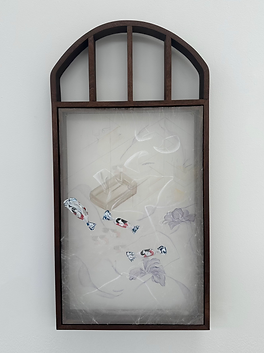
Wood
Experimenting with the canvas via sketches and layouts:
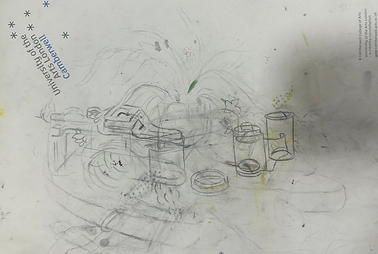
Some failed sketches
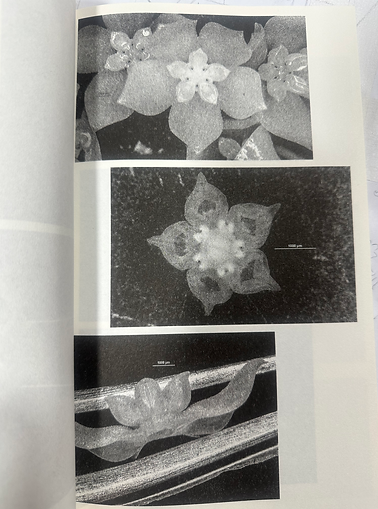
Analysing which angle looks best via microscopic x-ray of some of the flowers used in the Ikebana
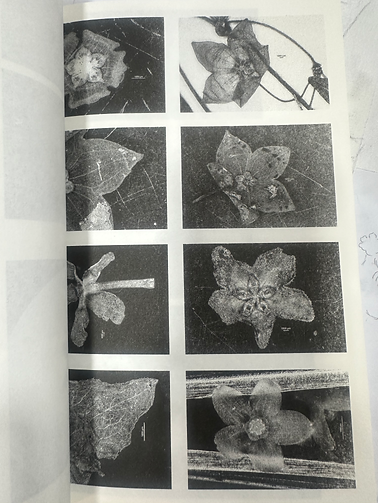
Analysing which angle looks best via microscopic x-ray of some of the flowers used in the Ikebana
Feedback:
Building on the feedback received during the Summer exhibition, I have continued to develop my work with a focus on several key concepts:
-
Handmade and Slowly Made Practice
Reflecting on the feedback about the value of handmade, slowly made practice, I initially began by guiding silkworms to weave silk directly onto my canvases. As my practice evolved, I transitioned into hand-weaving silk myself (which brings me to the next work I presented during the Summer Show).
These are time consuming processes.
Post-summer show, I was encouraged to contemplate the relationship between craft and art, as well as the value of handmade vs outsourced work.
-
Rhythms of the Natural World
The feedback was in response to my use of silkworms and silk fibers in my work. I was encouraged to consider the rhythms of the natural world. I elaborate more about this under critical reflection.
“Anyone born on Earth knows that our home is exceptional. If you were prompted to think about what makes this planet so special, you might mention the vast oceans and abundant oxygen, perhaps the protective magnetic field.But an equally remarkable yet less obvious is the way that Earth preserves accessible records of countless earlier versions of itself, condensing billions of years into the volume of the present-day continents. In achieving this feat of compression, Earth effectively wrinkles it's time- according eons and juxtaposing moments in its long history”
- Marcia Bjornerud (Bjornerud, 2024)
This quote highlights that we "live in a vast, labyrinthine library of time" (Bjornerud, 2024). Given that we are surrounded by so much time, it is inevitable that the rhythms of the natural influence how we articulate time. I borrowed from this idea to further develop my practice (elaborated under critical reflection)
-
Feminine Aspects and Domestic Spaces
My works in Unit 2 often featured women in domestic spaces. Hence, I was encouraged to consider the feminine aspect of domestic spaces and the relationship with women in history. Professor Geraint pointed at the possibility of considering domestic spaces as sites of creativity and safety. The Women’s Pool in Hampstead is an iconic example. As a female only pool, it is a space where women can feel safe.
Borrowing from this idea, my paintings use soft, tranquil colours, as well as gentle lines that create an environment of security and tranquility. This helps to convey a sense of intimacy.
-
Celebrating Domestic Relationships with Women
Domestic spaces have always been associated with women. Usually in ways that reinforce stereotypes. In my practice, before being reminded by Lecturer Remi, I have never given this much thought.
Through my research, I realised that there are other artists who portray female figures in a domestic space in ways that are conscious about reinforcing stereotypes, such as Tracey Emin . Hence, I think as long as I highlight the positive aspects of these environments,I will be able to avoid reinforcing negative stereotypes.
-
Music and Art
I was also given the feedback to consider including music in my work, as the audio sense is a very powerful way to engage the audience. I actually considered this before the Summer Exhibition. However, I was struggling to master the art of weaving. Hence, I did not have the time to proceed with this idea.
Notes:
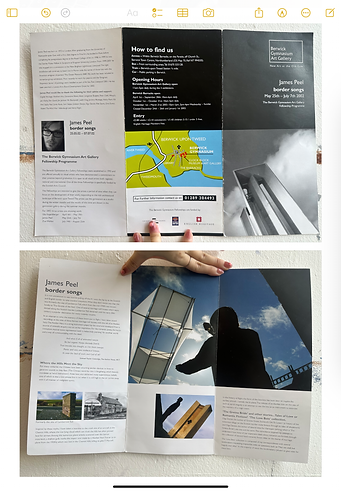
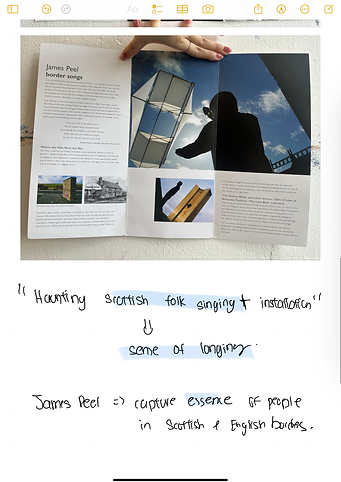
Summer Exhibition:
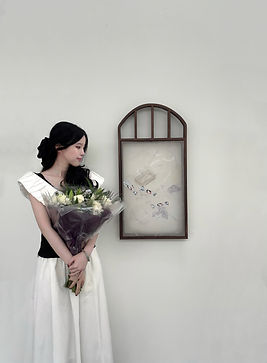
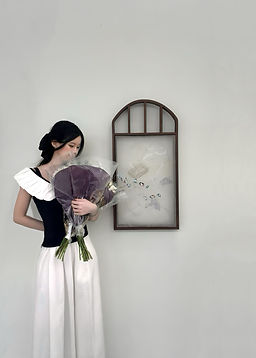
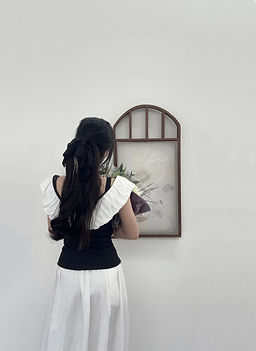
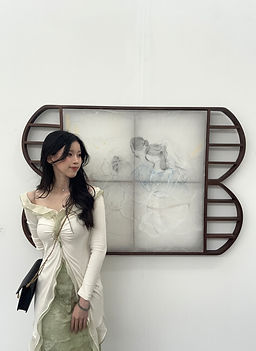
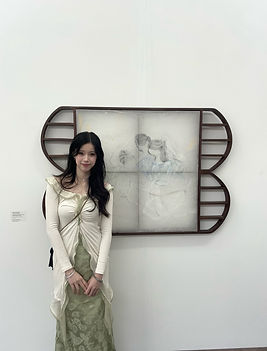
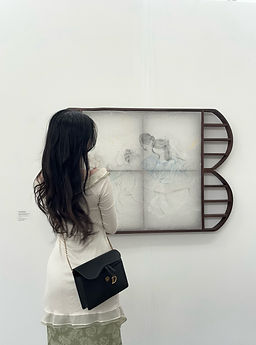
Before the Summer Exhibition started, I was worried about the traffic flow of the Summer Exhibition. This is because it was so close to the summer holidays that I thought many people would be out of the country during the summer holidays.
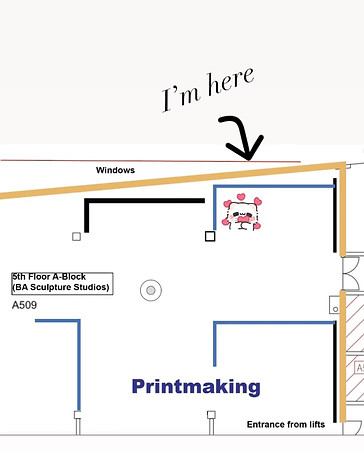
"how to get there" map : created to let my friends and family know where to find me
During the weeks leading up to the show, I was so focused on completing my paintings that I did not think about anything else. However, when one of my friends who would be coming to support the show asked me where specifically she can find my work, I realised that it is essential to let people know my exact location. Hence, I created a simplified "how to get there" map indicating my exact booth and posted it on my Instagram.
I initially contemplated getting name-cards too. However, my seniors mentioned that based on their experience, it is optional. Hence, I gave up on that idea.
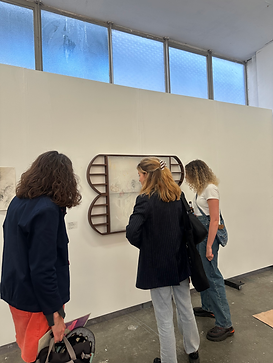
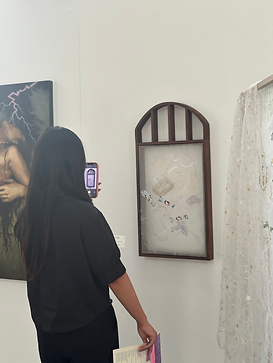
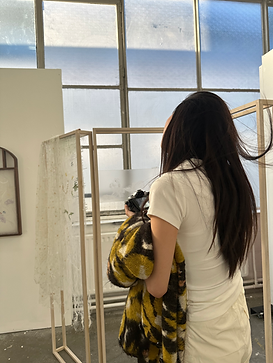
I aimed to be physically around as much as possible during the show, as I hoped to connect with my audience, meet new people, and hear fresh perspectives about my work. When I guided my audience on a journey of how I started by selecting the type of silk, I use, my process of memory drawing, and how I ended the entire process by guiding silkworms to form silk fibers across my canvas, I noticed that my viewers were more engaged in hearing about my research. I was surprised that my audience was interested in hearing more about the story behind each painting. In the past, I always felt that the stories that supported my memory drawings were too personal and, hence, were the least exciting part of my work. However, I received feedback that I should consider combining my work with the video footage that supports my work during my research. This is an exciting idea. However, it is challenging as most of my works are rooted in my experiences with my family and friends. My parents are highly private people due to their jobs. Hence, they do not appreciate their photographs or videos being made public (even on social media). Therefore, I might need to process the footage before combining it with my paintings.
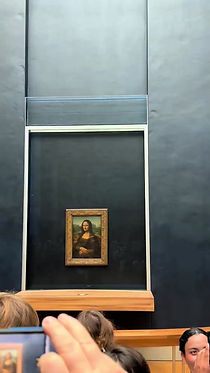
My works were placed separately due to limitations in space. As I watched the audience attempt to view my works in full, it reminded me of when I visited the Louvre in Paris. At the Louvre, The Wedding Feast at Cana by Paolo Veronese and Leonardo da Vinci's Mona Lisa are positioned directly opposite each other (Louvre, 2023). The placement of the paintings entices visitors to continuously shift their gaze back and forth (Louvre, 2023).This repeated action becomes a powerful metaphor for the engagement with history and time.
Video showcasing layout of the Louvre
Thinking back, I see parallels with my own practice. Sometimes coming back to the present helps me 'look back' further in time. This reinforces the importance of looking back—to re-contextualize and reinterpret—while engaging with the present.
Back
Forward
Bjornerud, M. (2024). Wrinkled Time: The Persistence of Past Worlds on Earth – Marcia Bjornerud. [online] Emergence Magazine. Available at: https://emergencemagazine.org/essay/wrinkled-time/ [Accessed 20 Nov. 2024].
Frieze London (2024). Artist-to-Artist: Magda Stawarska Selected by Lubaina Himid. [online] Frieze.com. Available at: https://www.frieze.com/video/artist-artist-magda-stawarska-selected-lubaina-himid [Accessed 20 Nov. 2024].
Kakizaki, J. (2023). 京都:在日本传统花园‘玄寿庵 ’体验私人插. [online] RED. Available at: https://www.xiaohongshu.com/explore/65744e4000000000380297ec?app_platform=ios&app_version=8.30&share_from_user_hidden=true&xsec_source=app_share&type=normal&xsec_token=CBygoXbwQ9va6ozbT-Q58jqUwFmDh-DzvmQs0sgxpCjlk=&author_share=1&xhsshare=CopyLink&shareRedId=ODozQzg9NUw2NzUyOTgwNjc0OTk1STpN&apptime=1732474611.
Louvre (2023). From the ‘Mona Lisa’ to ‘The Wedding Feast at Cana’. [online] Le Louvre. Available at: https://www.louvre.fr/en/explore/the-palace/from-the-mona-lisa-to-the-wedding-feast-at-cana.
Su xi Su xi (2024). 在京都吃到的漂亮饭们. [online] RED. Available at: https://www.xiaohongshu.com/explore/66c7299c000000001f01dd7e?app_platform=ios&app_version=8.30&share_from_user_hidden=true&xsec_source=app_share&type=normal&xsec_token=CB6OG6CVNDnqB8Pc-3Z-oNjwK0RfSSpyZNEL6mumChU0w=&author_share=1&xhsshare=CopyLink&shareRedId=ODozQzg9NUw2NzUyOTgwNjc0OTk1STpN&apptime=1732474390.
The Hong Kong Cookery (2014). White Rabbit Creamy Candy 大白兔奶糖. [online] Thehongkongcookery.com. Available at: https://www.thehongkongcookery.com/2014/08/white-rabbit-creamy-candy.html [Accessed 20 Nov. 2024].