


I use writing to reflect on developments in my research. These texts are a series of journal entries derived from my studio diary.
1. Chronological reflection
November witnessed a considerable shift in my practice. I will now chronologically reflect on my journey.
My past research practice centered around the study of 'Perceptual Distortion'. My works were focused on understanding the various ways in which individuals engage, see, and interpret their lived reality. As a result, in my work images, narratives of distorted reality exist.
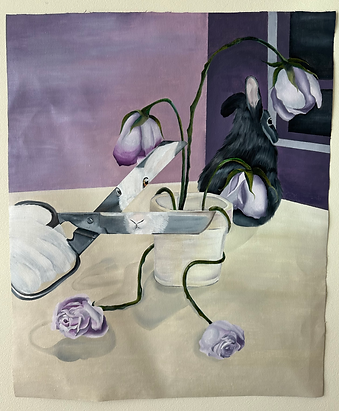
Example of some of my past works:
Untitled
2023
Oil on canvas
100cm x90cm
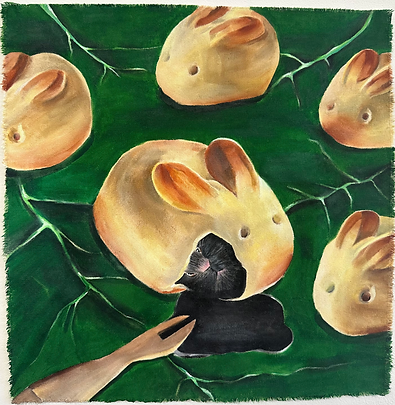
Example of some of my past works:
Untitled
2023
Oil on canvas
50cm x50cm
In my past research practice, my bunnies were central to my work. My bunnies are a significant part of my life and, hence, are symbolic of my various psychological states. As they are present in many of my dreams and memories, they also represent the aspect of "everyday" or "reality". This was combined with the scenes in my paintings, which are often not what one might see in the "everyday". For example, rabbits taking on human-like behavior. Such dichotomy also allowed me to explore the line between the everyday and the profound, vital in discussing altered states.
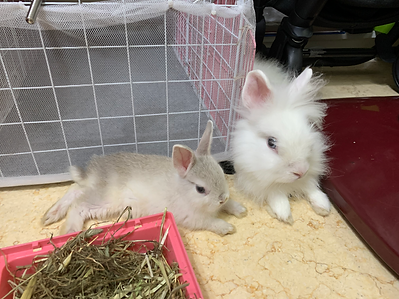
Photo of my bunnies: On the left is Isla, on the right is Kyzo
On the last day of November, Isla, one of my bunnies, passed away. The vets in charge attributed her passing to an incurable genetic condition. Rationally, I do understand what they are saying. However, I still feel it is my fault- I must have done something wrong. Maybe it is because I once woke up late and Isla missed one dose of medicine, or I might have hugged her too tightly once.
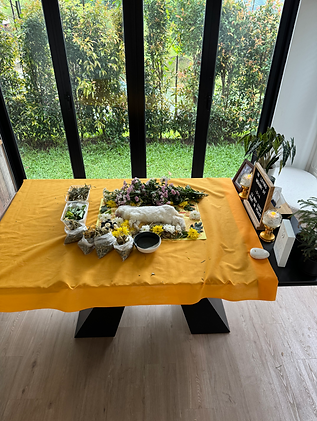
Photo of Isla's funeral
In subsequent days, as I contemplated my artistic practice, I felt a strong sense of guilt. The once joyful habit of drawing inspiration from my bunnies now felt like an intrusion, like tying down a soul that should be left in peace. I no longer had the right to immortalize her through art. I felt very lost both emotionally and in my artistic practice.
I had always believed that my memories of Isla were immune to the ruthless march of time. However, one day, I realized my memories of the little habits, those adorable quirks that made up the essence of Isla's spirit, had become increasingly distant. Her warmth, the familiar brush against my leg, our unique means of communication—each detail seemed to evade me increasingly. I never expected those memories to fade. I always assumed that I would remember every lick, every glance, every touch.
Photo of Isla's funeral
This ignited my interest in the process of individual memory formation. How are memories formed? What affects our memory formation process? Why do some memories stay with us forever, but others slip away like whispers in the wind? These questions bring me to a new chapter of my research.
My current research investigates the process of individual memory formation. Over the years, artists and philosophers have discussed how the human mind captures and imprints experiences.
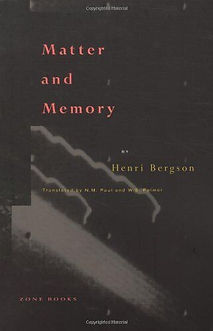
In 'Matter and Memory', Henri Bergson explores the relationship between consciousness and memory (Autor: Henri Bergson, 2005). The concept of duration and the lived experience of time are central to his philosophy. This perspective lays the ground for contemplation on how the perception of time (primarily believed to be subjective) intertwines with the encoding of memories. In Bergson's proposed theory, memory formation is dynamic, shaped by the ebb and flow of human consciousness over time (Autor: Henri Bergson, 2005).
'Matter and Memory' book cover
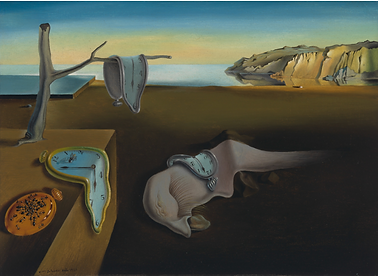
Bergson's theory is somewhat mirrored in Salvador Dali's melting clocks. Like distorted fragments of time, Salvador Dali's melting clocks are metaphors for the flexibility of temporal encounters (The Museum of Modern Art, 2019). Though Dali's melting clocks do not directly address the process of memory formation (encoding stage specifically), his works raise questions about memory's malleability and how time affects the encoding of lived experiences.
In the process of memory formation, the central question is how the human brain converts raw sensory data into cohesive memories. My practice strives to find answers to this question. At this point, my research converges with Bergson's philosophy and Dali's belief. Individual memory formation is continuous and fluid-each stage is connected. Encoding involves imprinting information through a complex dance of emotion, perception, and consciousness. All these culminate during the consolidation stage by solidifying these imprints into long-term memories. Retrieval drags stored memories back into consciousness (Cues and emotions influence this stage). Ultimately, the threads of individual experiences are weaved into dynamic memories via this continuous and fluid journey.
2. Critical reflection on materiality
Under material research, I have delved into the reasons why Silk is an important aspect of my practice. In this section I would like to take a more philosophical exploration into the importance of materials in art. Several philosophical theories relate to materiality in contemporary art.
.jpg)
In "The Origin of the Work of Art," Heidegger argues that the choice of materials in art is a manifestation of the artist's engagement with being (Heidegger, 1976, p.4–6). This statement resonates with me. As elaborated under documentation, my choice of focusing on silk as my canvas stems from my cultural heritage and the various psychological prompts silk embodies.
I will be the first to admit that I found "The Origin of the Work of Art" difficult to understand. There is also much debate around whether the concept of the earth in the text, often understood as the 'materiality of art,' is linked to the 'materiality of art.'(The Dangerous Maybe, 2019). However, in my opinion, what is essential when reading such texts is to have my own understanding and takeaways and implement them into my practice. The importance of materiality is also touched on in Merleau-Ponty's "Eye and Mind" (Merleau-Ponty, n.d.). My understanding of this text is that Merleau-Ponty argues that our perception of the world is deeply rooted in our bodily experiences (Merleau-Ponty, n.d.). Naturally, this includes our interactions with materials. Based on my understanding, materials, in Merleau-Ponty's philosophy, are mediums for sensory experiences (Merleau-Ponty, n.d.). This is reflected in my practice. As mentioned under material research, silk in my practice extends beyond a visual aesthetic towards a form of sensory engagement. This is also aligned with Merleau-Ponty rejection of the Cartesian division between subject and object (Merleau-Ponty, n.d.). By thinking from this perspective, I can allow my memories to meld with the materiality of silk, creating a synthesis where the boundaries between self and material blur.
Many prominent artists, such as Anselm Kiefer, Eva Hasse, and Rudolf Arnheim, emphasize the importance of materiality in their practice. For example, in Anselm Kiefer's practice, lead in his alludes to sorrow and guilt, and ashes symbolize the "temporal significance of earth" and sentiments of destruction (Hadfield, 2015).
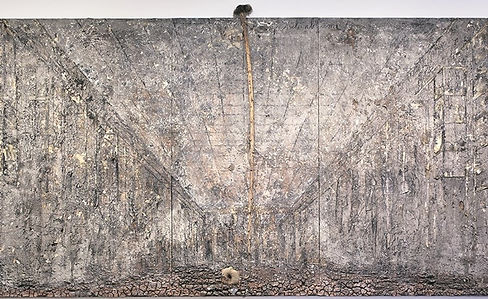
In this painting, Kiefer recreates the horrific vision of a city being engulfed in an apocalyptic haze by "spreading dust and earth across the painting, then burning parts of its surface". According to mythology, Lilith (Adam's first wife) was a seductive and demonic airborne spirit. Lilith seems to bring "destruction from the air upon Oscar Niemeyer's modernist buildings" in this work (Tate, n.d.).
Anselm Kiefer's ' Lilith': Oil paint, ash and copper wire on canvas
3. Reflections on memory and narrative therapy
I began exploring the process of individual memory formation primarily due to the passing of Isla, my rabbit. This feels like Isla's final gift. Nevertheless, I often doubted myself — was researching memories a way to grasp the final connection with Isla, or did it leave me in a perpetual cycle of sadness?
The debate surrounding whether to let go of memories or to retain them when loved ones have departed is complex and has roots in various philosophical theories. ‘Stoicism’ argues that relinquishing attachment to specific memories aligns with achieving emotional tranquility (Robertson, 2013). On the other hand, advocates of ‘Existentialism’ emphasize the importance of confronting the complexities of life (Moore, 2022). I feel there is no "correct" answer to this debate. I lean towards confronting those memories. When I worked at Singapore General Hospital, I experienced first-hand the effectiveness of narrative therapy in curing emotional traumas. This is backed by multiple research, such as 'Treating social phobia in children through group narrative therapy (2014)' (Dulwich Centre, n.d.). Forming narratives is essential in narrative therapy to allow individuals to "find their voice and explore events in their lives and the meanings they have placed on these experiences." (Clarke, 2023). Only when individuals are willing to face those memories and build up the narratives can they become observers of their stories, identify potential issues of their memory, and gain clarity in their stories (Clarke, 2023). Most importantly, crafting narratives allows people to observe themselves, creating a distance between the individual and their problems (Clarke, 2023).
Amanda Wilkinson (n.d.). The Presence of People and Shapes | 5 September - 13 October 2013. [online] Amanda Wilkinson. Available at: https://amandawilkinsongallery.com/exhibitions/11-the-presence-of-people-and-shapes-phoebe-unwin/press_release_text/ [Accessed 24 Jan. 2024].
Autor: Henri Bergson (2005). Matter and memory. Editora: New York: Zone Books.
Casey, G. (n.d.). Phoebe Unwin - George Vasey. [online] georgegvasey.com. Available at: https://georgevasey.com/writing/phoebe-unwin/ [Accessed 24 Jan. 2024].
Clarke, J. (2023). Become the Expert of Your Own Life Through Narrative Therapy. [online] Verywell Mind. Available at: https://www.verywellmind.com/narrative-therapy-4172956.
Dulwich Centre (n.d.). Collection: Evidence for the effectiveness of narrative therapy. [online] The Dulwich Centre. Available at: https://dulwichcentre.com.au/collection-evidence-for-the-effectiveness-of-narrative-therapy/.
Hadfield, G. (2015). Contemporary Fine Art and Illustration... - A Journey of Understanding: Artist Review, - Anselm Kiefer, Scale and Materiality. [online] Contemporary Fine Art and Illustration... - A Journey of Understanding. Available at: http://grahamhadfield-contemporaryfineart.blogspot.com/2015/04/artist-review-anselm-kiefer-scale-and.html [Accessed 24 Jan. 2024].
Heidegger, M. (1976). The Origin of the Work of Art. University of Waterloo, pp.4–6.
Merleau-Ponty, M. (n.d.). Eye and Mind *. [online] Available at: http://www.biolinguagem.com/ling_cog_cult/merleauponty_1964_eyeandmind.pdf.
Moore, M. (2022). Existential Theory: History, Beliefs, Uses, and More. [online] Psych Central. Available at: https://psychcentral.com/health/existential-theory.
Robertson, D. (2013). A Simplified Modern Approach to Stoicism. [online] Donald J. Robertson. Available at: https://donaldrobertson.name/2013/02/03/a-simplified-modern-approach-to-stoicism/.
Soul Sonica (2023). Kim Jung Gi’s Memorizing Method: Draw What You Remember Without Reference, Check Reference, & Repeat. [online] www.youtube.com. Available at: https://youtu.be/yx6dbybn-rk?si=04TXFN8Tw3YaXQfb [Accessed 24 Jan. 2024].
Tate (n.d.). ‘Lilith‘, Anselm Kiefer, 1987–9. [online] Tate. Available at: https://www.tate.org.uk/art/artworks/kiefer-lilith-t05742#:~:text=The%20city%20is%20engulfed%20in [Accessed 25 Jan. 2024].
The Dangerous Maybe (2019). On Martin Heidegger’s The Origin of the Work of Art. [online] Medium. Available at: https://thedangerousmaybe.medium.com/on-martin-heideggers-the-origin-of-the-work-of-art-443eff395ac6.
The Museum of Modern Art (2019). The Persistence of Memory. [online] The Museum of Modern Art. Available at: https://www.moma.org/collection/works/79018.